
Why Moss Grows on Roofs in Glasgow’s Climate
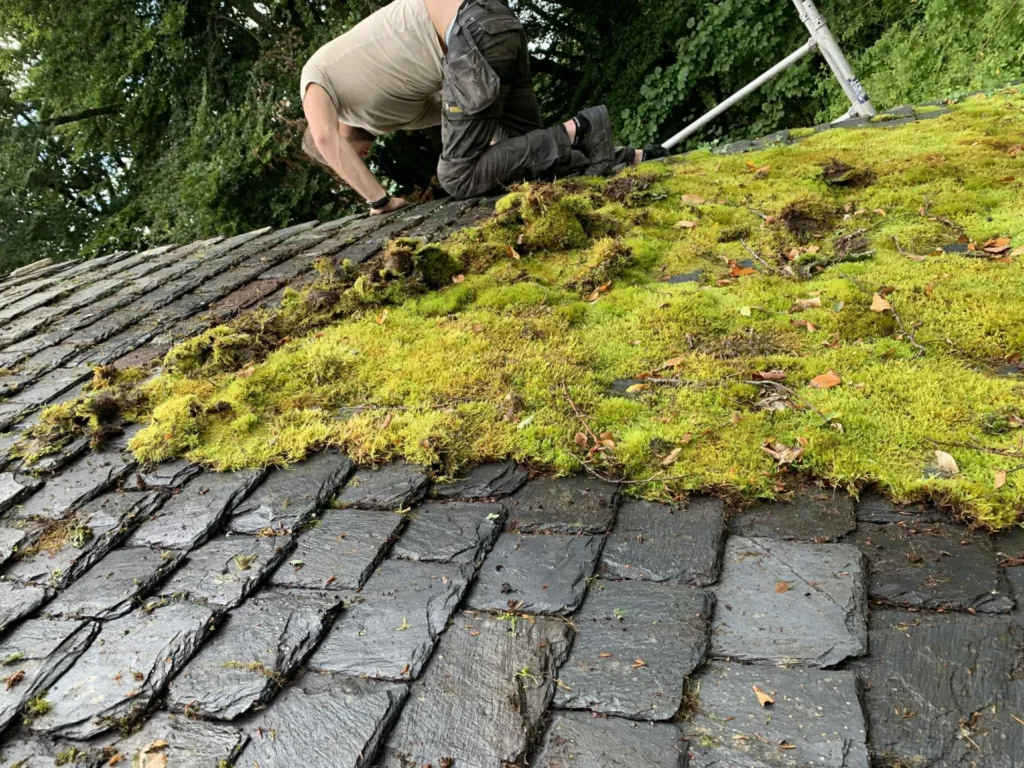
Moss grows on roofs in Glasgow because the city’s wet, humid climate keeps tiles damp, while shade and porous materials allow spores to settle and spread. With frequent rainfall and slow-drying roof surfaces, moss on roofs Glasgow is almost unavoidable.
What starts as a green patch quickly becomes a bigger issue: blocked gutters, lifted tiles and early leaks are common roof moss problems Scotland homeowners face.
The good news? Once you understand why moss grows on roofs, especially under typical Glasgow climate moss growth conditions, you can prevent damage safely and extend your roof’s lifespan.
1. Constant Rainfall & High Humidity Levels in Glasgow
As one of the UK’s wettest major cities, Glasgow receives persistent rainfall throughout the year, meaning roof surfaces stay damp far longer than in drier regions. High rainfall combined with elevated Glasgow humidity levels means moisture is constantly present on the surface of tiles, trapped within cracks, and absorbed into porous materials.
This damp climate Scotland is known for creates ideal biological conditions for moss spores, which thrive in environments where water doesn’t evaporate quickly. Once the spores settle, the ongoing wetness accelerates spreading the reason Glasgow humidity and moss issues are far more severe than in southern regions.
2. Limited Sunlight & Shaded Roofs Fuel Moss Growth
Many neighbourhoods such as Bearsden, Shawlands and Pollokshields have mature tree coverage, tall buildings and narrow streets all contributing to roof surfaces receiving limited sunlight. Less sun means the roof dries slowly, allowing moss to take hold and expand.
North-facing roofs in Glasgow stay wet the longest, often remaining damp for days after rainfall. Overhanging trees also drip moisture and drop debris, which further increases moisture retention.
Together, these factors explain what makes Glasgow roofs mossy and why moss often appears on the same side of roofs across entire streets.
3. Porous Roofing Materials Absorb Water
Many Glasgow homes, especially Victorian and Edwardian properties use slate, concrete, or clay tiles. While durable, these materials are naturally porous. They absorb rainwater, and over time, micro-cracks form that hold moisture long after rainfall stops.
This means moss doesn’t just grow on the tile it grows within tiny pores and rough surfaces, binding tightly to the roof.
4. Organic Debris + Pollution Create Ideal Moss Conditions
When roofs gather organic debris leaves, twigs, dirt and seeds they create a nutrient bed that moss loves. Add Glasgow’s urban air pollution and soot, which trap moisture on the tile surface, and you get a perfect environment for moss to anchor and grow.
This debris + moisture combination is the missing piece in many guides explaining moss growth on the roof. Moss will always thrive faster when dirt and organic matter accumulate, which is why moss on roofs Glasgow is often worst around gutters, valleys and under trees.
How Moss Actually Grows on Roof Tiles
Moss grows on roof tiles because wind-carried spores land on damp surfaces and anchor themselves into tiny pores and cracks. Once attached, moss acts like a sponge, holding water and keeping the tile wet. This constant moisture helps it thicken, spread and form dense mats.
In Scotland’s cool, wet climate, roofs rarely dry fully, so the moss life cycle repeats quickly. That’s why moss growth on roof tiles happens so fast in Glasgow and why it often returns soon after rain or shade.
Is Moss Bad for Your Roof?
Yes. Moss is bad for your roof. In Glasgow’s wet climate, it holds moisture against the tiles, speeds up deterioration, lifts and cracks tiles, blocks gutters and creates gaps that lead to leaks. What looks harmless can quickly cause structural damage and expensive repairs if not removed properly.
1. Moss Retains Water and Breaks Down Tiles
Moss damages roof tiles because it holds water like a sponge, keeping the surface wet for days. This constant moisture breaks down tile coatings and lets water penetrate deeper. In winter, the freeze–thaw cycle expands cracks and weakens tiles further. As moss thickens, it lifts tiles, creating openings that lead to leaks. Over time, this moisture pressure shortens the lifespan of concrete, slate and clay tiles.
2. Moss Blocks Gutters and Causes Hidden Water Damage
Moss often breaks off the roof and lands in gutters, blocking drainage. When gutters overflow, water runs down walls, causing damp patches, staining and, in severe cases, structural damage. Blocked gutters also force water back under the roofline, soaking fascias, soffits and timber a common source of hidden leaks. Many Glasgow homeowners only notice the problem once internal damp or mould appears.
3. Moss Creates Gaps That Lead to Roof Leaks
As moss grows, it wedges itself between roof tiles and pushes them apart. These small gaps allow rainwater to slip underneath tiles and into valleys, ridges and joints. In Scotland’s wet climate, this quickly leads to leaks, rotten battens and damaged underlay. This is why roof moss problems in Scotland are a major cause of early roof failure, especially on older slate and concrete roofs. In short: moss is harmful because it creates direct entry points for water, leading to repeated repairs if ignored.
Why Moss Grows Faster in Glasgow Than the Rest of the UK
Moss grows faster in Glasgow because the city’s wet, humid west-coast microclimate keeps roofs damp far longer than in most UK regions. Frequent rainfall, high humidity and low sunlight hours create ideal conditions for rapid moss colonisation. These slow-drying surfaces explain why moss grows so fast in Glasgow and why moss-related roof issues are far more common in Scotland, especially compared to the drier south. The damp climate Scotland is known for directly accelerates moss growth year-round.
Scotland’s Humidity Index Encourages Rapid Moss Growth
Moss grows quickly in Glasgow because the city records higher humidity levels than most UK regions. Moist, coastal air keeps roofs from drying, allowing spores to germinate continuously. In the damp climate Scotland is known for especially Glasgow moss rarely becomes dormant and instead grows almost year-round.
Higher Rainfall Frequency Keeps Tiles Damp for Days
Glasgow’s frequent, low-intensity rainfall keeps roof tiles moist far longer than in drier UK cities. Even light drizzle resets the drying time, so surfaces never fully dry. This is exactly why the Glasgow weather causes moss on roofs; constant re-wetting creates perfect conditions for uninterrupted moss development.
Lower Average Sunlight Hours Slow Evaporation
Glasgow receives lower sunlight hours than many parts of the UK, meaning roof surfaces evaporate moisture more slowly. Moss thrives where moisture lingers, and Glasgow’s limited sun exposure intensifies the problem. North-facing roofs and shaded areas dry the slowest, making them the first places moss takes hold.
How to Stop Moss Growing on Roofs in Scotland (Expert Advice)
Stopping moss growth in Scotland isn’t about quick fixes, it’s about creating roof conditions where moss cannot survive. In a damp climate like Scotland’s, prevention is far more effective and more affordable than constant reactive cleaning. Below are the most reliable, expert-backed methods to reduce long-term moss growth and protect your roof.
1. Improve Drainage & Keep Gutters Clear
Poor drainage is one of the biggest reasons moss spreads across Glasgow roofs. As moss detaches from tiles, it often falls into the guttering system, leading to moss blocking gutters, water overflow and damp staining. Overflowing gutters can saturate fascias, soffits and even push water beneath the tiles.
Routine gutter maintenance is a core part of roof cleaning Glasgow homeowners rely on to break the moisture cycle moss needs to grow. When gutters stay clear, the roof dries faster significantly reducing moss regrowth.
2. Reduce Shade and Increase Airflow
Moss thrives in cool, shaded environments. Increasing sunlight exposure and airflow makes the roof less hospitable to moss.
This includes:
- Trimming back overhanging trees
- Removing debris from valleys and tile edges
- Ensuring good attic and roof ventilation
These actions reduce moisture retention and create the airflow essential for how to prevent moss on roofs in Scotland. On shaded Glasgow roofs, even small improvements can drastically slow moss development.
3. Apply Professional Biocide / Roof Moss Treatments
Supermarket moss removers rarely solve the problem long-term because they only kill surface moss. In Scotland’s climate, moss quickly returns unless a high-grade treatment is applied.
Professional roof moss treatment Glasgow services use industry-approved biocides designed for slate, clay and concrete tiles. These treatments:
- Kill moss, algae and lichen down to the spore
- Prevent regrowth for 12–36 months
- Are safe for UK roofing materials
- Continue working long after application
Products like Wet & Forget moss work best when used after proper manual cleaning not as a standalone fix. A professional can recommend the best moss killer for roofs UK based on your roof type and moss severity.
4. Why You Should Never Pressure Wash a Roof
Pressure washing may remove moss quickly, but it causes serious long-term damage. High-pressure cleaning can:
- Strip tile coatings
- Crack or shatter concrete and slate tiles
- Force water underneath roof coverings
- Void manufacturer warranties
- Create leaks and structural issues
Since pressure washing roof moss weakens already compromised tiles, it multiplies the risk of roof failure. Because moss is bad for roofs, adding high-pressure water only accelerates deterioration.
For this reason, reputable Scottish roofers use softwash cleaning, manual removal and controlled biocide application methods proven safe for local roofing materials.
Professional Roof Cleaning in Glasgow (When to Call Experts)
Homeowners can reduce moss, but fully removing it and stopping it from returning almost always requires professional help. Glasgow’s porous roofing materials, historic slate roofs, and constant moisture mean roofs here need gentle, specialist methods. This is why our expert moss removal Glasgow services are essential for long-term protection.
Professionals know how to clean tiles safely, restore proper drainage, and apply treatments that work in Scotland’s climate.
Manual Moss Removal (Safe for Slate, Concrete & Clay)
The first stage of a proper roof clean is manual moss removal, using specialist scraping tools shaped to the tile profile. This removes heavy moss without lifting or damaging tiles, a common risk when untrained homeowners attempt it.
Manual removal is especially important for older Glasgow properties with slate roofs or worn concrete tiles. It also prepares the surface for biocide application, ensuring the treatment penetrates deeply and lasts longer.
Softwash Roof Cleaning for Zero Tile Damage
After scraping, professionals use softwash roof cleaning Glasgow methods. Softwashing uses low-pressure water and specialist cleaning solutions, making it safe for:
- Old slate roofs
- Weathered concrete tiles
- Clay tiles
- Delicate ridges, valleys, flashings
Softwashing avoids the structural damage caused by pressure washing. This is why reputable roof cleaning Glasgow companies never recommend high-pressure washing especially on the older roof types found throughout the city.
Biocide Application for Long-Term Protection
Once the roof is clean, professionals apply a roof-grade biocide to kill remaining spores and prevent regrowth. This is the only reliable way to stop moss returning in Glasgow’s wet climate.
A biocide treatment:
- Works gradually over several months
- Penetrates pores and micro-cracks
- Protects tiles for 12–36 months
- Keeps surfaces cleaner longer
- Is formulated specifically for UK roof materials
Supermarket products don’t penetrate deeply enough, which is why moss quickly returns when DIY treatments are used.
Why Glasgow Roofs Need Gentler, Specialist Methods
Glasgow’s housing stock often includes:
- Natural slate roofs on Victorian/Edwardian homes
- Older, porous concrete tiles
- Clay tiles that crack easily under pressure
These materials cannot tolerate pressure washing. Professional cleaning protects the roof structure while ensuring long-term results in the city’s damp, shaded conditions.
When moss becomes heavy or persistent, it’s time to contact roof cleaning services near me to prevent leaks, blocked gutters, and ongoing structural damage.
How Much Does Roof Moss Removal Cost in Glasgow?
Prices vary by roof size, moss thickness and access, but typical Glasgow costs are:
- £300–£600 for small to medium homes
- £650–£1,200 for larger or heavily mossed roofs
- £120–£200 for gutter clearing
- £80–£150 for biocide re-application
A free inspection gives the most accurate estimate.
FAQs
What conditions cause moss to grow on roofs?
Moss grows on roofs when surfaces stay damp for long periods. Shade, trapped moisture, porous tiles and organic debris create ideal conditions for spores to anchor and spread. Cool, humid climates like Scotland accelerate the growth cycle.
Why does moss grow more in wet climates like Glasgow?
Glasgow’s frequent rain, high humidity and slow-drying roof surfaces allow moss to stay hydrated year-round. Moss thrives in moisture-rich environments, so Glasgow’s climate speeds up colonisation and makes regrowth more likely.
Is moss more common on roofs in Scotland?
Yes. Scotland’s damp, cool climate with persistent rainfall makes moss far more common compared to drier UK regions. Roofs remain wet longer, especially in shaded areas, giving moss an ideal environment to grow and spread.
How does Glasgow weather affect roof moss?
Glasgow’s constant rain, high humidity and low sunlight hours keep roofs damp, helping moss spores germinate quickly. Slow evaporation means moisture stays trapped in tiles, accelerating moss growth and increasing long-term roof damage risks.
Can moss damage your roof tiles?
Yes. Moss absorbs water and holds it against the tile surface, causing cracks, lifting, freezing–thaw damage and leaks. Over time, the weight and moisture retention of moss can weaken tiles and shorten a roof’s lifespan.
How do I stop moss growing on my roof in Glasgow?
Improve drainage, clear gutters, trim overhanging trees and increase airflow. For long-term protection, use professional softwash cleaning followed by a biocide treatment. These methods prevent regrowth in Glasgow’s damp climate.
Do north-facing roofs get more moss?
Yes. North-facing roofs receive the least sunlight, stay wetter for longer and dry slowly after rainfall. These conditions make them the most susceptible to moss growth across Glasgow and wider Scotland.
Is it safe to pressure wash moss off a roof?
No. Pressure washing can crack tiles, strip protective coatings and force water underneath the roof system. Softwashing and manual removal are the recommended safe methods for moss removal in Scotland’s climate.
Conclusion Preventing Moss Damage in Glasgow Homes
Glasgow’s constant rain, high humidity and low sunlight make local roofs especially prone to moss growth. But with the right steps, homeowners can protect their tiles, prevent leaks and extend roof lifespan. Clearing gutters, reducing shade and applying professional biocide treatments all help control moss, while softwash cleaning and expert moss removal Glasgow services provide the safest long-term results in Scotland’s climate.
If moss is spreading or you want to prevent damage before it starts, explore our full roof cleaning Glasgow guide to see how we clean and protect roofs across the city.